

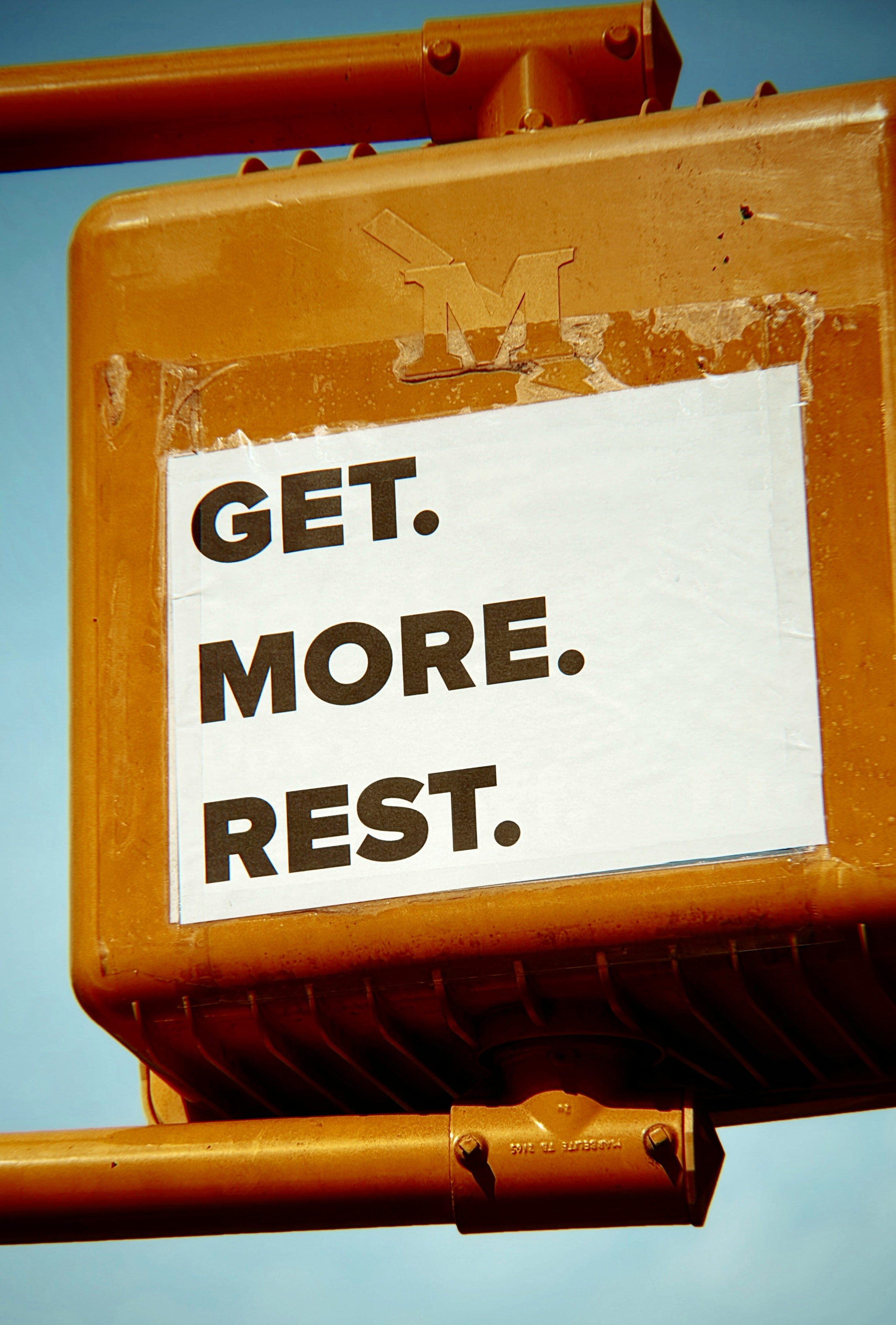
With the turn of the new year – the “crossing over,” as the Ghanaians say – I’ve been talking a lot about rest. Specifically, how can we cultivate lives that include more rest.
Well, in a corporate (national?) culture obsessed with hustle and work, I personally practice something deeply countercultural: Sabbath.
Since my first year of law school, I’ve carved out a 24-hour period every week to stop working completely. No law books, no client calls, and no work obligations. From (usually) Saturday around noon to Sunday afternoon, everything shuts down.
What started as a survival tactic — a way to prevent law school from becoming a soul-crushing bootcamp — has become one of my life’s non-negotiables. It’s not imbued with religious legalism or checking a spiritual box, though. It’s about reclaiming what it means to be human in a culture that wants to turn us into machines.
Rest is resistance.
Our professional world (lawyers, corporate types, and almost anyone else on the rat race) treats people like commodities. Lawyers, especially, are measured by the hour…literally. We build our careers, reputations, and livelihoods on how much we can produce, and how many hours we can squeeze out of each day. What results is a culture filled with burnout, anxiety, and emptiness.
Sabbath stands in direct opposition to that machine.
Observing the Sabbath reminds me that I am not defined by my productivity. I am, first and above all else, a human being, made in the image of God — made for work, yes, but also made for worship, for relationships, for joy.
I’ll be honest: at first, I resisted it. I believed the lie that if I just worked harder, stayed up later, sacrificed more, I could secure my future. That I could outrun scarcity. That I could earn safety. But Sabbath isn’t a reward for having everything finished. It’s a declaration of trust. It’s saying, with my actions and agency, that, even (and especially) when I stop, God keeps on working.
Every week, Sabbath offers me a reset.
Keeping those 24 hours sacred offers me time with my wife. That time includes slow walks with our dogs, books that aren’t assigned reading, church community, and unrushed meals.
It’s rediscovering what joy feels like when it’s not tethered to achievement.
Some weeks, it feels easy. Others, it feels like climbing a mountain — turning off the phone, letting the emails go unanswered, and trusting that the world won’t fall apart without me. But that’s part of the beauty. Sabbath reminds me that my identity is not in being a lawyer, or a businessman, or even a future public servant.
My identity is secured in something greater. Someone greater.
Scripture tells a different story than the world.
The Bible says God worked six days and then rested. Not because He needed to, but because the work was good, and the rest made it complete. It was an act of delight, not of exhaustion.
In Exodus, Sabbath is framed not just as a commandment, but as a gift. And In Deuteronomy, it’s linked to liberation, a reminder that we are no longer slaves to endless labor.
For me, practicing Sabbath is practicing freedom.
It’s an act of resistance against a world that says you must be available 24/7 to prove your worth. It’s a declaration that my life is not a spreadsheet. It’s a refusal to let the grind define me.
As a lawyer, businessman, and (God willing) future public servant, I want to be a voice that says:
You are not what you produce.
You are not your email count or your billable hours.
You are not your LinkedIn profile.
You are a human being, valuable and beloved, even when you rest.
And it starts with something so simple that it feels radical in today’s world:
Stop. Rest. Trust.
Every week, I choose to lay down the tools of labor and pick up the practices of life: prayer, rest, laughter, family, and reflection. Every week, I fight to live like I believe the Gospel is true, that my future is secured not by my effort, but by God’s grace.
Sabbath isn’t an escape from work.
It’s what makes my work possible.
It’s what makes my work meaningful.
And in a culture racing toward burnout, rest might just be the most revolutionary thing we can do.